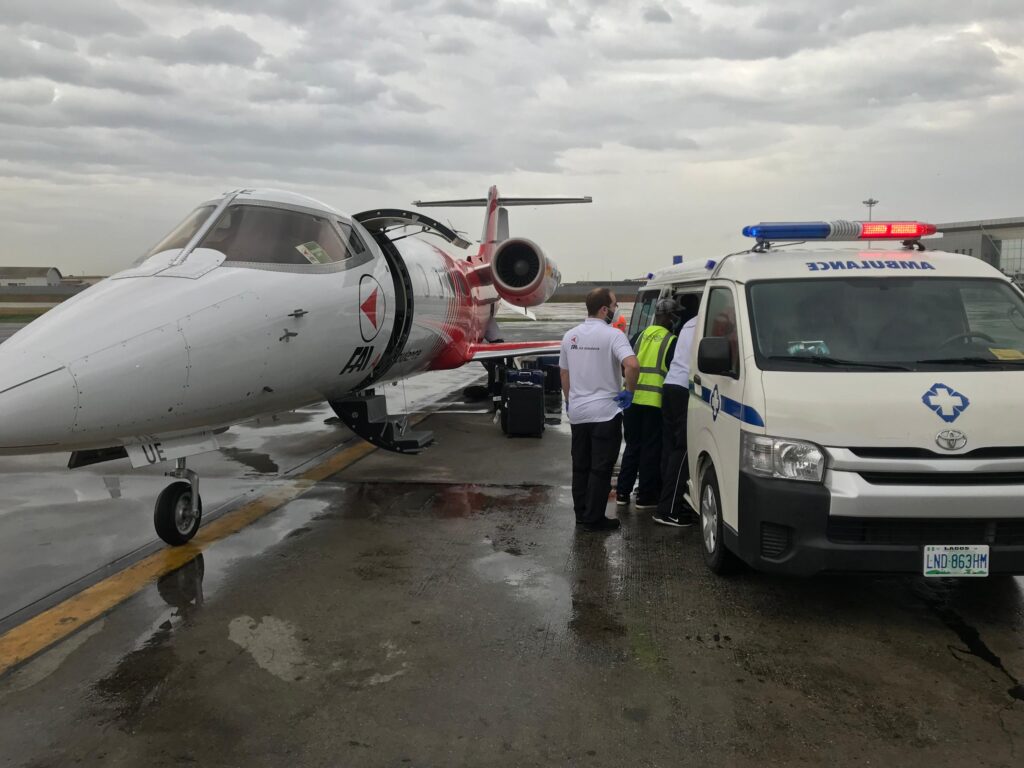


ICU vs ALS vs BLS Ambulance in Lagos: Which Do You Need for an Inter-Hospital Transfer?
Call +234 (0) 810 036 8345 or +234 (0) 816 038 2932, or email hello@citron-health.com.
The Short Answer
Book a BLS ambulance if the patient is stable and only needs a stretcher, monitoring, or a low level of oxygen. Book an ALS (advanced) ambulance if the patient is not critical but needs stabilization and advanced equipment, for example a newborn in an incubator, a patient with breathing difficulty, or severe trauma. Book an ICU (critical-care) ambulance if the patient is on a ventilator, has critical-care medication running through an infusion pump, or could deteriorate on the road. The higher level is not automatically better. It costs more, and a stable patient gains nothing from it.
1. BLS, ALS and ICU Ambulances Compared
The right level depends on what the patient needs during the journey, not on the diagnosis alone or the distance.
| Patient situation | Recommended level |
|---|---|
| Stable, needs stretcher transport | BLS |
| Stable, on low-flow oxygen (for example nasal cannula) | BLS with oxygen |
| Needs advanced cardiac monitoring or emergency drugs available | ALS |
| Newborn or infant needing a transport incubator (stable: needs warmth, oxygen, monitoring) | ALS (neonatal) |
| Breathing difficulty needing close monitoring, not on a ventilator | ALS |
| Severe trauma needing stabilization and monitoring | ALS |
| Has any IV medication running through a pump or continuous infusion | ALS or ICU |
| On a ventilator or intubated | ICU |
| Newborn who is ventilated, on CPAP, or on infusions | ICU (neonatal critical care) |
| Recent deterioration, or high risk of getting worse en route | ALS or ICU |
| Simple IV line in place, nothing running | Often BLS, confirm with dispatch |
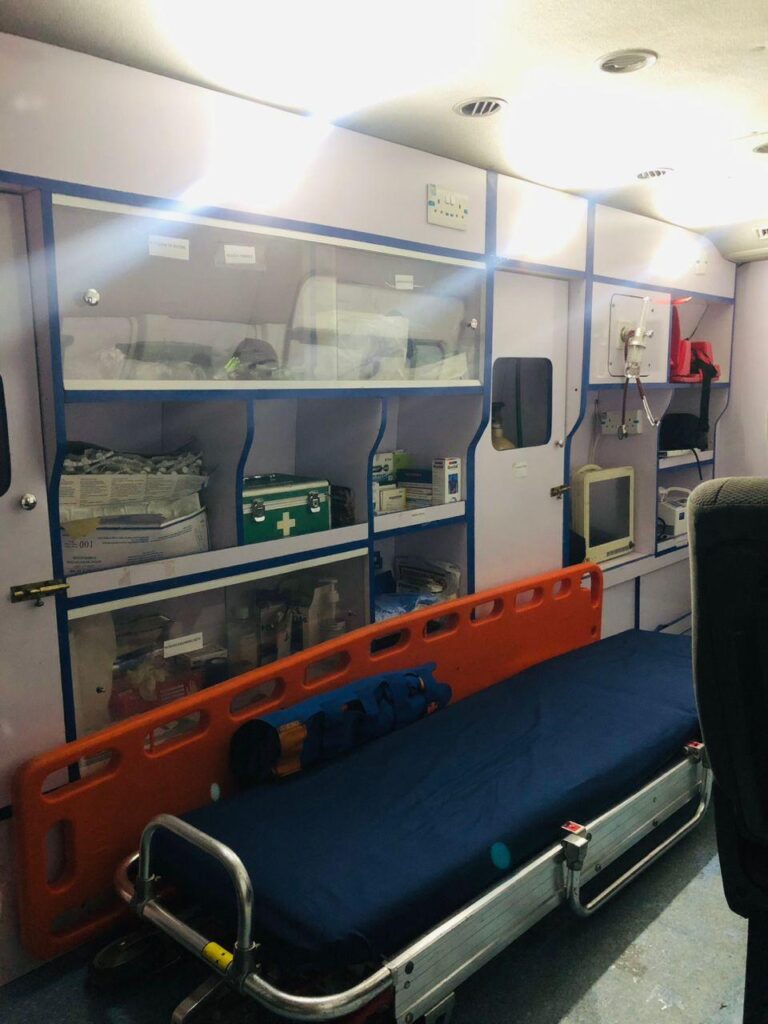
- BLS (Basic Life Support) covers stretcher transport, oxygen, pulse oximetry, blood pressure checks, suction, an AED, and basic emergency care.
- ALS (Advanced Life Support) is for patients who are not yet critical but need stabilization. It adds advanced cardiac monitoring, advanced airway management, defibrillation, IV emergency drugs, and, on neonatal units, a transport incubator.
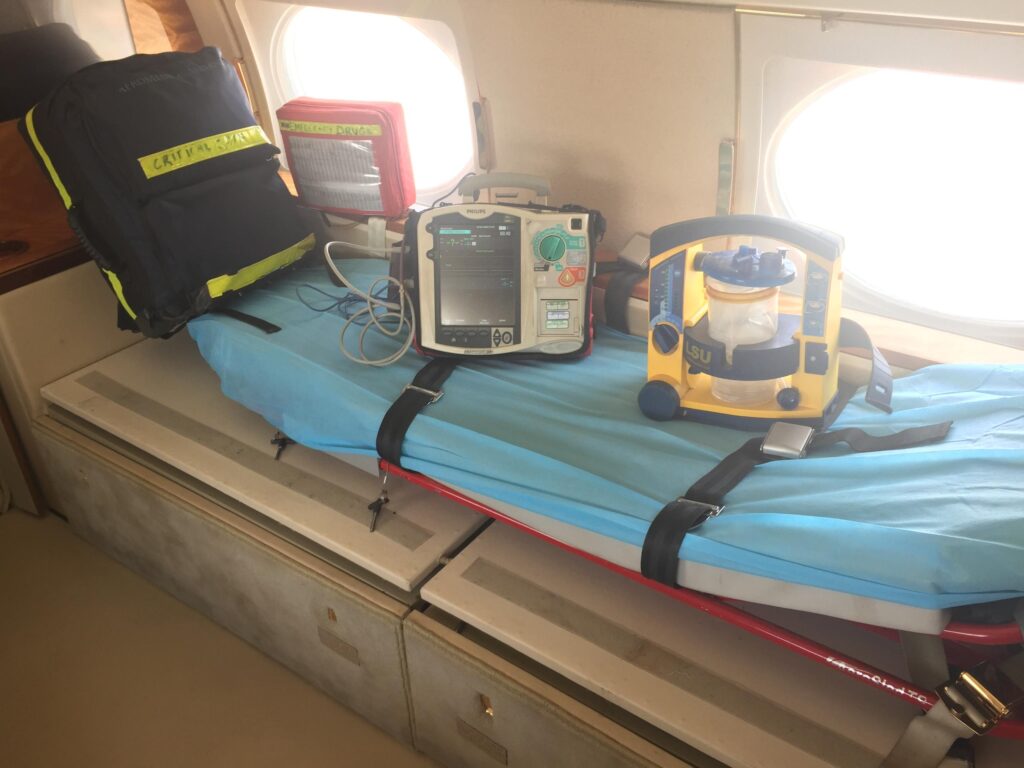
- ICU / critical-care ambulances carry a transport ventilator, continuous ECG, capnography, infusion or syringe pumps, and critical-care medications, for patients who need intensive treatment while moving. You may also see them called mobile ICU or MICU ambulances.
Check the label. Providers use “ICU ambulance” differently. Some providers sell an ALS ambulance as a mobile ICU. Ask which ventilator, monitor, and clinical crew will actually be on board.
2. When a BLS or Oxygen Ambulance is Enough
Choose BLS when the patient is stable but can’t travel safely by car or taxi. Typical cases:
- Discharge home for a bed-bound or elderly patient
- Transfer between hospitals for a scan or specialist review
- Transfer to a rehabilitation or long-term-care facility
- Orthopaedic patients who cannot sit upright
- Stable patients on supplemental oxygen
Booking BLS for these patients avoids paying for critical-care equipment and staffing they won’t use. A higher-level ambulance is not automatically safer for a stable patient.
Oxygen Ambulance in Lagos
An oxygen ambulance is an ambulance with oxygen supply for the trip. Needing oxygen does not automatically mean BLS is enough. A stable patient on a nasal cannula is very different from a patient in severe respiratory failure. When you call, tell dispatch:
- Why the patient needs oxygen
- The current flow rate, if known
- How it’s delivered (cannula, mask, other)
- Whether other breathing support is in use
- Whether the patient has worsened recently
Stable patient? Plan ahead. Scheduled transfers are easier to price and staff than emergency dispatch. Call +234 (0) 810 036 8345 or +234 (0) 816 038 2932.
3. When You Need an ALS Ambulance
Choose ALS when the patient is not critical but needs stabilization, advanced monitoring, and emergency drugs ready during the journey. ALS sits between BLS and ICU: more than a stretcher and oxygen, less than a ventilator and a critical-care crew. Typical cases:
- Newborns and infants who need a transport incubator for warmth, oxygen, and monitoring
- Breathing difficulty that needs close monitoring or assisted oxygen delivery, but not a ventilator
- Severe trauma, such as a road crash, serious fractures, or head injury, needing stabilization and monitoring
- Patients who need advanced cardiac monitoring or emergency drugs on hand
- Patients with a recent change in condition who are stable enough to travel without critical-care support
If the patient is on a ventilator or has critical-care infusions running, book an ICU ambulance instead.
Newborn and Incubator Ambulance in Lagos
A neonatal (incubator) ambulance carries a transport incubator that keeps a baby warm and secure, with oxygen and continuous monitoring. For a stable premature or sick newborn who needs warmth, oxygen, and observation, this is usually an ALS-level transfer. A baby who is ventilated, on CPAP, or on drug infusions needs a neonatal critical-care team, so book ICU level.
Before you book, confirm:
- The baby’s age, weight, and current oxygen needs
- The incubator has its own power supply and oxygen for the whole journey, including Lagos traffic
- Who will accompany the baby, and their neonatal experience
- The receiving hospital’s neonatal unit has agreed to take the baby
Newborn needs a transfer? Tell us the baby’s age, weight, and oxygen needs. Call +234 (0) 810 036 8345 or +234 (0) 816 038 2932.
4. When You Need an ICU Ambulance
Choose an ICU ambulance when the patient needs treatment or continuous monitoring that can’t pause for the journey:
- Mechanical ventilation or an artificial airway
- Severe respiratory failure needing ventilator support
- Ventilated or unstable newborns needing neonatal critical care
- Infusions of vasopressors, sedatives, or other critical-care drugs
- Continuous advanced cardiac monitoring
- Unstable heart or blood pressure
- Severe trauma with unstable vital signs or a compromised airway
- ICU-to-ICU or high-dependency transfers
- Any patient likely to deteriorate during the trip
Ambulance with a Ventilator in Lagos
A ventilated patient needs a transport ventilator, enough oxygen for the whole journey plus a reserve, full monitoring, and a clinical crew trained to manage the airway. Before you book, confirm:
- The ambulance has a transport ventilator
- It can deliver the mode and settings the patient needs
- Oxygen supply covers the expected journey time, including Lagos traffic
- The monitoring equipment available
- Who will accompany the patient and their qualifications
Critical patient? Send dispatch the ventilation status, infusions, and vital signs before the ambulance leaves. Call +234 (0) 810 036 8345 or +234 (0) 816 038 2932.
5. Drips and IV Medication: What Changes the Crew You Need
Short answer: A drip alone doesn’t decide it. What’s running through it does.
- Line in place, nothing running: usually manageable in a BLS ambulance.
- Fluids or medication running through a pump or infusion: needs a crew qualified to manage it, so ALS or ICU.
- Sedation, vasopressors, insulin infusions, antiarrhythmics, or continuous analgesia: need close monitoring and an appropriately qualified crew.
What each crew member may administer depends on their qualifications and the provider’s medical protocols. Saying the patient “has a drip” isn’t enough. Tell dispatch the drug name, rate, and how long it has been running.
6. Transferring a Patient to LASUTH or LUTH
A bed-to-bed transfer means the ambulance collects the patient from the sending hospital and delivers them to the receiving team, who take formal handover. Typical routes include a private clinic in Lekki to LASUTH in Ikeja, or a general hospital to LUTH in Idi-Araba.
Confirm acceptance first. Whenever the situation allows, make sure the receiving hospital has agreed to take the patient and knows who is receiving them.
Have ready before the ambulance leaves:
- Diagnosis or reason for transfer
- Current vital signs
- Oxygen requirement
- Current medications and active infusions
- Airway status
- Relevant lab results and imaging
- Referral letter or transfer summary
- Name and contact of the receiving doctor or department
- Confirmation of bed or clinical acceptance
For critical patients, the sending and receiving clinical teams should coordinate directly. It is a medical handover, not ordinary transport.
7. Cost of an Ambulance in Lagos
Our current rates (updated October 2026) cover Lekki, Victoria Island, Agungi, Marina, Yaba, Ikeja, Oshodi, Gbagada and Maryland. Prices are in naira.
Ambulance Patient Transport Rates
| Service | Price per trip | Waiting time |
|---|---|---|
| BLS ambulance | ₦150,000 | First 20 minutes free at pickup and destination, then ₦15,000 per hour |
| ALS ambulance | ₦200,000 | First 20 minutes free at pickup and destination, then ₦25,000 per hour |
| ICU ambulance | ₦250,000 per hour | |
| Neonatal incubator ambulance | ₦250,000 per hour |
Ambulance Standby Rates
| Service | First 3 to 4 hours | Each extra hour |
|---|---|---|
| BLS ambulance standby | ₦150,000 | ₦25,000 |
| ALS ambulance standby | ₦200,000 | ₦35,000 |
Example: A stable patient moving between two hospitals in our coverage area by BLS ambulance pays ₦150,000 for the trip, including the first 20 minutes of waiting at each end. A patient who needs ALS pays ₦200,000.
What moves the price:
- Ambulance level and clinical crew
- Distance, and expected time in traffic
- Oxygen use and ventilator use
- Extra equipment
- Waiting time at either hospital
- Emergency versus scheduled booking
- Travel outside Lagos
For an exact quote, send: pickup location + destination + patient condition + oxygen or ventilator needs + preferred time.
8. What to Tell the Dispatcher
Skip “I need an ambulance.” Give them:
- Where is the patient? (for example, private hospital in Lekki)
- Where are they going? (for example, LASUTH, Ikeja)
- Are they stable? Mention any recent change.
- Do they need oxygen? How much, delivered how?
- Are they ventilated or intubated?
- Is it a newborn or infant? Give age, weight, and whether an incubator is needed.
- Is there severe trauma? Describe the injuries and when they happened.
- Is any IV medication or infusion running? Name and rate.
- What monitoring is in use?
- Has the receiving hospital accepted the patient? Who is the contact?
Send these details by phone or email:
- Sending facility:
- Destination facility:
- Patient condition (stable stretcher / stable on oxygen / needs advanced care such as incubator, breathing difficulty, or severe trauma / critical or ventilated):
- Patient age (for newborns: age and weight):
- Oxygen requirement:
- Active IV medication or infusion (yes / no / unsure):
- Your phone number:
Send to: +234 (0) 810 036 8345 | +234 (0) 816 038 2932 | hello@citron-health.com
9. Frequently Asked Questions
Is an oxygen ambulance the same as a BLS ambulance?Not always. Most BLS ambulances carry oxygen, but the patient’s overall condition decides the level. A patient on low-flow oxygen who is otherwise stable is usually fine with BLS. A patient in severe respiratory distress may not be.
When do I need an ICU ambulance instead of BLS?When the patient is on a ventilator, has critical-care infusions running, needs continuous advanced monitoring, or could deteriorate during the trip.
What is the difference between an ALS and an ICU ambulance?ALS is for patients who are not critical but need stabilization and advanced monitoring, for example a stable newborn in an incubator, breathing difficulty, or severe trauma. ICU is for patients on a ventilator or who need critical-care treatment throughout the trip.
Do you have an ambulance with an incubator for newborns?[Yes/No. State your neonatal incubator ambulance availability, crew, and coverage area.] Tell us the baby’s age, weight, and oxygen needs so we can match the right vehicle and crew.
Can a BLS ambulance carry a patient with a drip?If a line is in place but nothing is running, often yes. If medication or fluids are actively running through a pump, you’ll typically need ALS or ICU. Confirm with dispatch.
Can an ambulance take a patient to LASUTH or LUTH?Yes, subject to the patient’s condition and the receiving hospital agreeing to take them. Confirm acceptance beforehand where possible.
Can a BLS ambulance carry a bedridden patient?Yes, if the patient is stable and needs no advanced treatment during the journey.
How much does an ambulance cost in Lagos?Within our coverage area, patient transport starts at ₦150,000 per trip for BLS and ₦200,000 for ALS. ICU and neonatal incubator ambulances are ₦250,000 per hour. The final price depends on ambulance level, waiting time, and equipment. See the full rates above.
Is the government ambulance service an option?For emergencies, you can call 767 or 112, the numbers the Lagos State Ambulance Service (LASAMBUS) lists for reaching its ambulances. LASAMBUS also warns the public about people posing as its staff, so use only official numbers. Availability and response time vary, so many families and hospitals arrange a private transfer for planned or time-sensitive inter-hospital moves.
Need an inter-hospital ambulance in Lagos?
Whether the patient needs BLS, an oxygen ambulance, ALS, a newborn incubator ambulance, or an ICU ambulance, tell us their current condition and we’ll match the right vehicle and crew.
Book an ambulance now: Tell us the patient’s condition, pickup location and destination, and we’ll match the right vehicle and crew.
Call +234 (0) 810 036 8345 Call +234 (0) 816 038 2932 Email hello@citron-health.comFor critical or rapidly worsening patients, coordinate with the treating and receiving clinical teams and use emergency services appropriate to the situation.